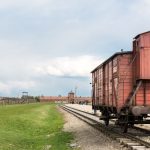
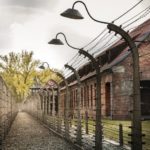
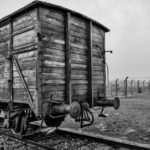
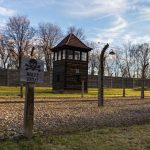
When the Soviet army reached Auschwitz on 27 January 1945, it found about 7,000 prisoners, burned and blown-up crematoria, and warehouses full of the belongings of the murdered. Two years later the site became a museum. Today the Auschwitz-Birkenau State Museum is one of the most visited places of memory in the world, and it continues to protect the remains of the camp and to tell the story of those who died there.
The first months after liberation
In the weeks after liberation, Soviet and Polish medical teams and the Polish Red Cross cared for the surviving prisoners, many of whom were too weak to leave. A Soviet commission documented the crimes, collected evidence and filmed the grounds. In 1945 and 1946 parts of the former camp were also used by the Soviet and Polish authorities for other purposes, including as a camp for German prisoners of war and civilians. Local people took wood and building materials from the abandoned barracks of Birkenau to rebuild their homes, which is one reason why so much of the camp no longer exists.
Read more about these first days in our article on the liberation of Auschwitz.
Former prisoners create the Memorial
The initiative to preserve the camp came from its survivors. In 1946 a group of former Polish political prisoners, among them Tadeusz Wąsowicz and Kazimierz Smoleń, returned to Oświęcim to protect the site and its traces. They guarded the grounds, collected documents and objects, and began preparing an exhibition.
The first exhibition opened in 1947, and on 2 July 1947 the Polish parliament passed an act establishing the Memorial in the area of the former camps of Auschwitz I and Birkenau. The museum was to be a place of remembrance of the martyrdom of the Polish nation and other nations.
The Memorial during the Cold War
In the decades of communist rule in Poland, the way the history of Auschwitz was told reflected the politics of the time. The exhibitions emphasised the suffering of Poles and of citizens of many nations, and the fact that most of the victims were Jews was often not clearly stated. National exhibitions, prepared by the countries whose citizens had been deported, were opened in the blocks of the main camp from the 1960s.
Kazimierz Smoleń, a former prisoner, directed the Memorial from 1955 to 1990. In 1979, the site was inscribed on the UNESCO World Heritage List as a symbol of the cruelty of man to man in the 20th century.
After 1989
After the fall of communism, the Memorial changed the way it presented the history of the camp. The number of victims shown on the memorial plaques in Birkenau, which had for years given the inflated figure of four million, was corrected to about 1.1 million, based on research by the historian Franciszek Piper. The central role of Auschwitz in the Holocaust and the fact that about one million of the victims were Jews were now presented clearly.
In 2007, at Poland’s request, UNESCO changed the name of the site to Auschwitz Birkenau, German Nazi Concentration and Extermination Camp (1940–1945). Read why in our article on German Nazi camps, not Polish camps.
Preserving the site
The Memorial protects about 191 hectares: about 20 hectares in Auschwitz I and about 171 hectares in Birkenau. It holds tens of thousands of objects that belonged to the victims, such as shoes, suitcases, glasses and prayer shawls, as well as archives with documents of the camp administration and testimonies of survivors.
Many of these remains are fragile. The wooden barracks of Birkenau, the brick buildings, the ruins of the gas chambers and the objects in the collection need constant conservation. To pay for this work over the long term, the Auschwitz-Birkenau Foundation was created in 2009, collecting contributions from many governments and private donors into a permanent fund.
Education and visitors
The Memorial is not only a museum but also a centre of education. Its International Center for Education about Auschwitz and the Holocaust, founded in 2005, organises seminars, study visits and online courses for teachers and students from around the world. The Memorial also trains the guides, called educators, who lead visitors through the site.
Visitor numbers have grown steadily. In 2019 more than 2.3 million people visited the Memorial, a record, and more than 25 million people have visited since it opened. Most of them are young people from Poland, the United Kingdom, the United States, Germany, Italy and many other countries.
A cemetery and a place of memory
For the families of the victims, Auschwitz is the largest cemetery in the world without graves. The ashes of hundreds of thousands of people lie in the ground of Birkenau, in the ponds and fields near the crematoria. This is why the Memorial asks visitors to behave with respect, and why it stays open as a place of reflection, not a tourist attraction.
If you plan to visit, read our practical guide to visiting Auschwitz from Kraków. The Auschwitz-Birkenau Memorial has published more on its own history.
Frequently asked questions
Former prisoners began protecting the site in 1946; the Polish parliament established the Memorial by an act of 2 July 1947.
In 1979. In 2007 its name was changed to Auschwitz Birkenau, German Nazi Concentration and Extermination Camp (1940–1945).
More than 2.3 million people visited in the record year of 2019, and more than 25 million have visited since 1947.
Plan your visit to the Memorial
Visiting Auschwitz-Birkenau in person is the most powerful way to understand its history. We organise guided visits with licensed Memorial educators from Kraków, Warsaw, Prague, Vienna and other cities. See our tours