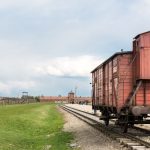
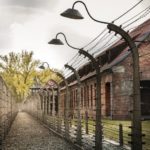
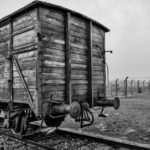
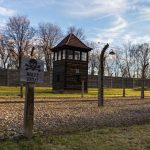
Auschwitz is sometimes described in newspapers, films or social media as a “Polish camp” or a “Polish death camp”. This is wrong. Auschwitz was built and run by Nazi Germany in occupied Poland. The correct description, used by the Auschwitz-Birkenau Memorial and by UNESCO, is a German Nazi concentration and extermination camp.
Who built Auschwitz?
In September 1939 Germany invaded Poland. The western parts of the country, including the town of Oświęcim, were annexed directly to the German Reich; the Germans renamed the town Auschwitz. In spring 1940 the SS set up a concentration camp there in former Polish army barracks. The camp was planned, built, guarded and administered by the German SS. Its first prisoners, brought on 14 June 1940, were 728 Polish political prisoners from the prison in Tarnów.
Poland as a state had no part in running Auschwitz or any other German camp. The Polish government was in exile in London, and occupied Poland was ruled by German authorities. Poles were themselves among the victims: about 140,000 to 150,000 were deported to Auschwitz, and about half of them died there.
Why “Polish camp” is misleading
The phrase “Polish camp” is sometimes meant only as a geographical description, because the camp was located on what is today Polish territory. But to most readers it suggests that Poles built or ran the camps, which is false. It shifts responsibility away from the Germans who designed and operated the system of mass murder, and it distorts the history of a country that was itself occupied and lost millions of its citizens, Jewish and non-Jewish, during the war.
The same applies to the other German camps in occupied Poland, among them Treblinka, Sobibór, Bełżec, Chełmno, Majdanek, Stutthof and Gross-Rosen.
The UNESCO decision of 2007
In 1979 the site of Auschwitz was inscribed on the UNESCO World Heritage List. At Poland’s request, and to counter reports describing the camps as “Polish”, the UNESCO World Heritage Committee decided on 27 June 2007 to change the official name of the site. It is now listed as Auschwitz Birkenau, German Nazi Concentration and Extermination Camp (1940–1945).
Remembering the whole history
Getting the name right does not mean ignoring difficult parts of Polish history. Some Poles denounced Jews to the Germans or took part in violence against them, while others risked their lives to hide them; more Poles have been recognised by Yad Vashem as Righteous Among the Nations than people of any other nationality. Historians continue to study both. What the terminology protects is a basic fact: the camps were a German project, created and run by the state of Nazi Germany.
How to describe Auschwitz correctly
| Avoid | Use instead |
|---|---|
| Polish camp | German Nazi camp in occupied Poland |
| Polish death camp | German Nazi extermination camp |
| Auschwitz, Poland (in a historical context) | Auschwitz, in German-occupied Poland |
When writing about the history of the camp, the safest formula is the one used by the Memorial: the former German Nazi concentration and extermination camp Auschwitz-Birkenau.
Read more about the camp’s history in our short history of Auschwitz-Birkenau, and about the people who ran it in our article on the SS at Auschwitz. The Auschwitz-Birkenau Memorial explains the change of the UNESCO name.
Read more about the different types of German camps in our article on concentration camps and extermination camps.
Read more about how the site became a museum and a UNESCO World Heritage Site in our article on Auschwitz after 1945.
Frequently asked questions
No. Auschwitz was built and run by Nazi Germany in occupied Poland. The correct term is a German Nazi concentration and extermination camp.
Since 2007 the site has been listed as Auschwitz Birkenau, German Nazi Concentration and Extermination Camp (1940–1945).
Plan your visit to the Memorial
Visiting Auschwitz-Birkenau in person is the most powerful way to understand its history. We organise guided visits with licensed Memorial educators from Kraków, Warsaw, Prague, Vienna and other cities. See our tours