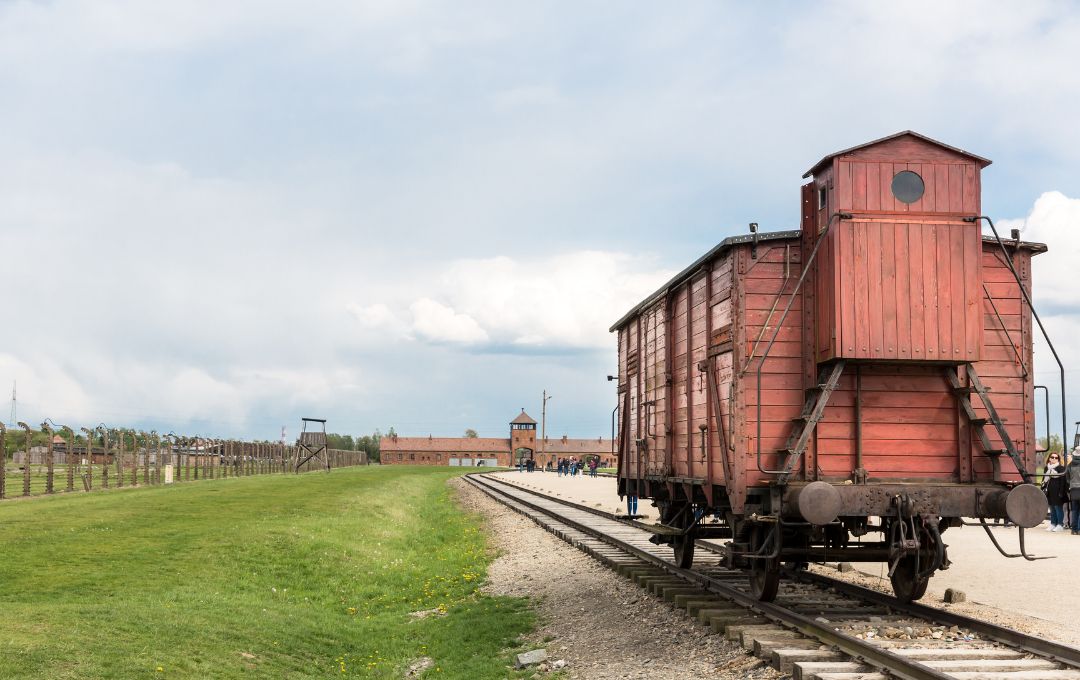
Much of what we know about Auschwitz comes from those who survived it. Their memoirs, testimonies and interviews describe what documents cannot: the journey in the cattle cars, the selection on the ramp, hunger, fear, friendship and loss. As the last survivors pass away, these books and recordings become the most important way to hear...Read More
When the Soviet army reached Auschwitz on 27 January 1945, it found about 7,000 prisoners, burned and blown-up crematoria, and warehouses full of the belongings of the murdered. Two years later the site became a museum. Today the Auschwitz-Birkenau State Museum is one of the most visited places of memory in the world, and it...Read More
Most visitors to the Auschwitz-Birkenau Memorial travel from Kraków. The town of Oświęcim, where the former camp is located, lies about 70 kilometres west of the city, and a visit takes most of a day. This guide explains how to get there, how to book entry, how much time to plan, and what to know...Read More
Soviet prisoners of war were among the first victims of mass killing at Auschwitz. In October 1941 about 10,000 of them were brought to the camp to build a new camp in Birkenau. Within five months about 9,000 of them were dead. Their fate is less well known than that of other groups, but it...Read More
The people deported to Auschwitz were told to bring luggage. Many believed they were being resettled to work in the East, and packed what they thought they would need for a new life: clothes, shoes, bedding, kitchen utensils, tools, medicine, photographs, money and jewellery. The SS took all of it. The warehouses where the property...Read More
In the summer of 1941 a Polish Franciscan friar, prisoner number 16670, stepped forward during a roll call in Auschwitz and offered to die in place of a man he did not know. His name was Maksymilian Maria Kolbe. He was murdered two weeks later in the basement of Block 11. The man whose life...Read More
Block 11 in the main camp of Auschwitz was known among prisoners as the “Death Block”. It held the camp prison, with its cells in the basement, and next to it, in the yard between Blocks 10 and 11, stood the wall where the SS shot thousands of people. Today it is one of the...Read More
The Holocaust was the systematic, state-sponsored murder of six million Jews by Nazi Germany and its collaborators between 1941 and 1945. It did not begin with the gas chambers. It developed step by step, from discrimination and exclusion in Germany after 1933 to ghettos, mass shootings and, finally, the death camps. Auschwitz, where about one...Read More
Auschwitz is sometimes described in newspapers, films or social media as a “Polish camp” or a “Polish death camp”. This is wrong. Auschwitz was built and run by Nazi Germany in occupied Poland. The correct description, used by the Auschwitz-Birkenau Memorial and by UNESCO, is a German Nazi concentration and extermination camp. Who built Auschwitz?...Read More
People often use the words “concentration camp” and “death camp” as if they meant the same thing. They did not. Nazi Germany built thousands of camps of different kinds, and only a few of them were designed for the immediate murder of the people brought there. Auschwitz is unusual because it was both. What was...Read More