In spring and summer 1944 Auschwitz-Birkenau became the site of the largest and fastest deportation of the Holocaust. Between 15 May and 9 July 1944 about 440,000 Jews were deported from Hungary, most of them to Auschwitz. The majority were murdered in the gas chambers within hours of arrival.
Hungary before 1944
Hungary was allied with Nazi Germany, and its government passed harsh antisemitic laws from 1938 onwards. Tens of thousands of Hungarian Jews died in forced labour units or were murdered after being expelled in 1941. Yet until 1944 the great majority of Hungary’s Jews, more than 800,000 people within its wartime borders, had not been deported. It was the largest Jewish community in Europe still living outside the German camps.
The German occupation and the deportations
On 19 March 1944 German troops occupied Hungary. A special SS unit led by Adolf Eichmann arrived to organise the deportations, working closely with the Hungarian authorities. Jews were forced to wear the yellow star, their property was seized, and from April they were confined in ghettos, district by district.
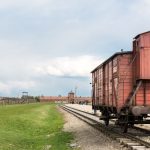
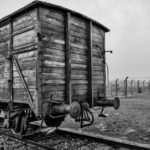
The deportations began on 15 May 1944. They were carried out by Hungarian gendarmes under SS direction, in sealed freight cars crowded with entire families. By 9 July, when the Hungarian regent Miklós Horthy had stopped further transports, about 440,000 people had been deported. Only the Jews of Budapest were still in Hungary.
Birkenau prepares
The SS prepared Auschwitz for the scale of the operation. A railway spur was built into Birkenau, with a new unloading ramp close to the gas chambers, and Rudolf Höss returned to the camp to oversee the killing. All the gas chambers and crematoria were in use, and when they could not cope, bodies were burned in open pits.
On the ramp SS doctors carried out selections. Most of the deportees, including almost all children, the elderly and mothers with young children, were sent straight to their deaths. A minority were selected for forced labour, registered in the camp or sent on to other camps and German factories. Women selected for work were held in sector BIII of Birkenau, a temporary camp built for them.
The Auschwitz Album
Much of what we know visually about these transports comes from a single source: the Auschwitz Album, a collection of photographs taken by the SS in May or June 1944 showing the arrival and selection of a transport of Hungarian Jews on the Birkenau ramp. It was found after the war by a survivor, Lilly Jacob, who recognised her own family in the pictures. The album is now kept at Yad Vashem in Jerusalem.
The fate of Hungarian Jewry
Of more than 800,000 Jews in wartime Hungary, nearly 570,000 were murdered. In autumn 1944 the Arrow Cross took power in Budapest and murdered thousands more, while diplomats such as Raoul Wallenberg issued protective papers that saved many lives. Hungarian Jews were the largest single national group among the victims of Auschwitz. Read more in our article on the victims of Auschwitz.
The belongings the deportees brought with them were taken by the SS and sorted in the warehouses known as Kanada.
Frequently asked questions
Between 15 May and 9 July 1944 about 440,000 Jews were deported from Hungary, most of them to Auschwitz-Birkenau.
Hungary was allied with Germany and had not handed over its Jews. After German troops occupied the country on 19 March 1944, the SS and the Hungarian authorities organised the deportations within weeks.
A collection of photographs taken by the SS in 1944 showing the arrival and selection of a transport of Hungarian Jews in Birkenau. It is kept at Yad Vashem in Jerusalem.
Plan your visit to the Memorial
Visiting Auschwitz-Birkenau in person is the most powerful way to understand its history. We organise guided visits with licensed Memorial educators from Kraków, Warsaw, Prague, Vienna and other cities. See our tours